We Provide The Best Service & Discounts For You

How Taxi Services Support Patients Travelling to Medical Appointments


March 12, 2026
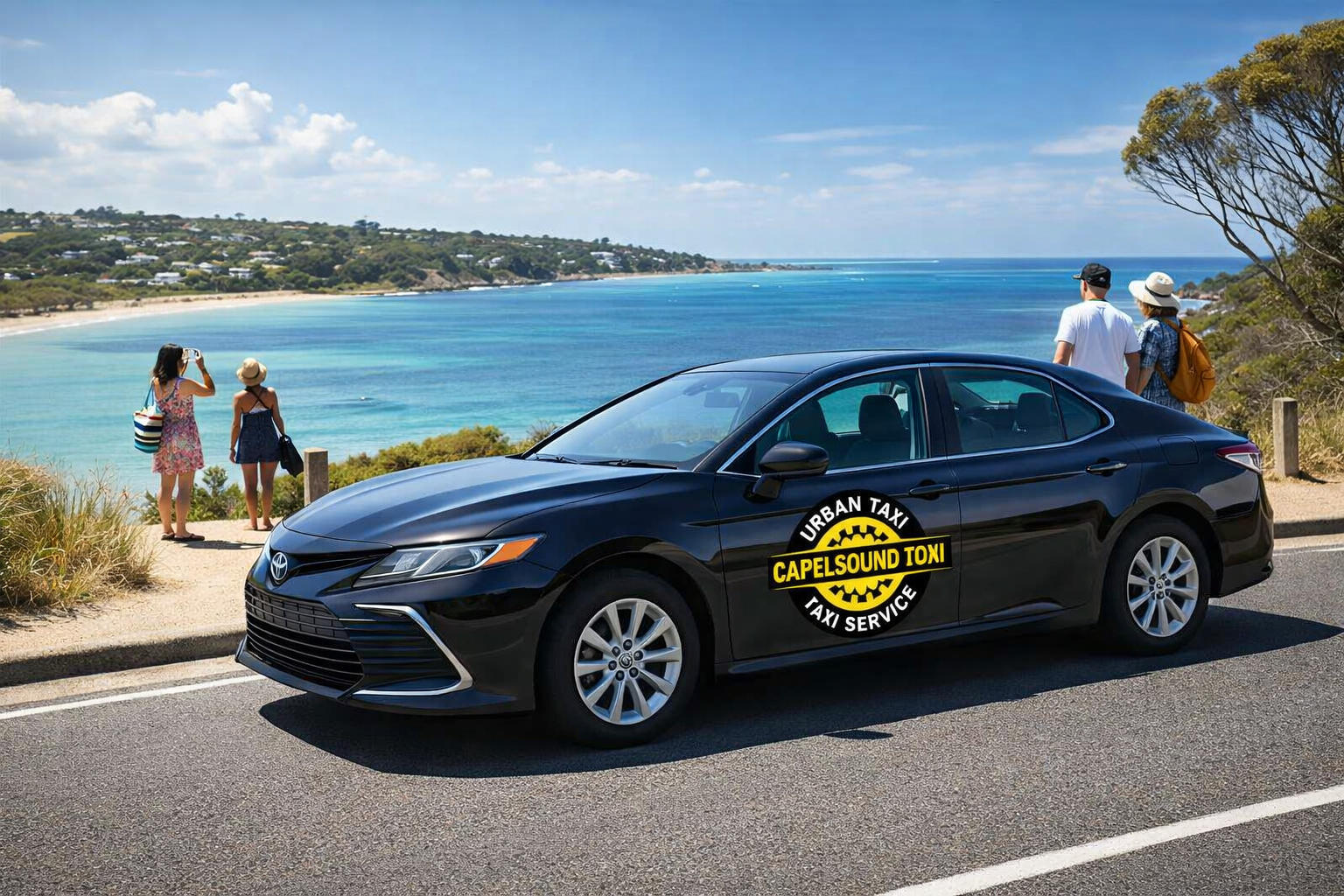
Travel Tips for First-Time Visitors to the Mornington Peninsula
The Mornington Peninsula is a coastal region in Victoria, Australia, extending approximately 40 kilometres south of Melbourne into Port Phillip Bay. The western shore fronts the calm, sheltered waters of the bay, while the eastern side faces the open swell of Bass Strait and the Southern Ocean. Within this narrow stretch of land visitors find beaches, wine country, a national park, geothermal springs, and some of Victoria’s most celebrated restaurants, all within 90 minutes of Melbourne’s CBD.
For first-time visitors, the Peninsula divides naturally into three zones. The northern end, from Mornington down to Dromana, is the most accessible and suburban. The central Peninsula, from Dromana through Rosebud, Rye, Blairgowrie, and Sorrento, is the heart of the visitor experience and contains the majority of accommodation, beaches, and wine estates. The southern tip, from Portsea through the Mornington Peninsula National Park to Cape Schanck, is the most rugged and dramatic part of the coastline.
Key facts for first-time visitors:
The most common route from Melbourne is the Monash Freeway (M1) southeast to Dandenong, connecting to the Mornington Peninsula Freeway (M11) which runs south to Dromana. From Dromana, Point Nepean Road follows the bay coastline through Rosebud, Rye, Blairgowrie, and Sorrento, continuing to Portsea at the peninsula’s tip.
Off-peak, the drive from Melbourne’s CBD to Rosebud takes around 75 to 80 minutes. During peak hours or holiday weekends, particularly Friday afternoons in January and at Easter, travel time can extend to two hours or more from the Melbourne end of the freeway. Travellers departing before noon or after 7pm on high-traffic Fridays will typically find significantly shorter journey times.
Trains run from Flinders Street Station to Frankston on the Frankston line, taking approximately 55 minutes. From Frankston, Bus Route 788 connects southward through Mornington, Safety Beach, Dromana, Rosebud, Rye, Blairgowrie, and Sorrento, with the route continuing to Portsea. Services run approximately hourly on weekdays, less frequently on weekends, and do not operate late evenings.
Public transport serves the main coastal towns adequately for those spending time at bay beaches or exploring town centres. It does not reach the wine regions of Red Hill, Main Ridge, or Merricks, and does not connect to Arthurs Seat, Peninsula Hot Springs, or the national park access points at Cape Schanck. Visitors planning to access these areas will need alternative transport.
Visitors arriving at Melbourne Airport (Tullamarine) and travelling directly to the Peninsula face a journey of approximately 130 to 150 kilometres depending on the destination. Groups of three or more travelling with luggage often find a direct airport taxi transfer more practical than renting a car on arrival day, particularly when factoring in airport parking costs and the unfamiliarity of Melbourne’s road network for interstate and international visitors.
Summer is the Peninsula’s peak season. Water temperatures in the bay reach 20 to 24 degrees Celsius, beach patrols are active, and all businesses, restaurants, and cellar doors operate at full capacity. January school holidays bring significant crowds, particularly on weekends, when traffic on the Mornington Peninsula Freeway can be severely congested on Friday afternoons and Sunday evenings.
Booking accommodation several weeks in advance is essential for summer visits. The same applies to winery restaurants, with the most sought-after tables at Montalto, Pt Leo Estate, and Ten Minutes by Tractor often requiring reservations four to six weeks ahead. Those arriving during busy holiday periods should also arrange local transport in advance, as demand for taxis during peak holiday periods increases considerably.
Autumn is widely regarded as the most rewarding season on the Peninsula. March in particular combines warm water temperatures carried over from summer with significantly reduced crowds and the beginning of the wine harvest. Cellar doors and winery restaurants are generally easier to book than in summer, and accommodation prices tend to soften from late March onward.
The harvest period, typically February through April depending on the vintage, sees cellar doors particularly active. The cooling temperatures from April make walking trails and hinterland exploration more comfortable than in the heat of summer.
Winter on the Peninsula is cool to cold, with temperatures often dropping to single digits overnight. However, this season has distinct advantages. Peninsula Hot Springs is at its most atmospheric, the contrast between cold air and warm geothermal water being at its greatest. The ocean beaches have a dramatic quality in winter that is difficult to replicate in summer, and accommodation prices across the Peninsula reach their lowest annual levels.
Some smaller businesses and cellar doors reduce their operating hours in winter, with some closing on Mondays and Tuesdays. Whale watching is possible from the clifftops near Cape Schanck and Point Nepean from June through October, when Southern Right Whales and Humpbacks pass through Bass Strait.
Spring sees the Peninsula gradually warm from September onward, with wildflowers appearing in the national park areas in September and October. The water begins to warm from mid-November, and crowds are lower than summer while the weather is increasingly pleasant. October and November represent a particularly good balance of favourable conditions and manageable visitor numbers.
Accommodation on the Mornington Peninsula is broadly distributed along the bayside coastal towns, from Mornington in the north to Portsea at the tip, with some options available in the wine country hinterland. The choice of base determines how easily visitors can access different parts of the Peninsula without spending excessive time driving.
For visitors focused primarily on beaches and easy access to multiple locations, Rosebud and Rye sit centrally on the lower Peninsula and offer the widest range of accommodation price points, from holiday parks to self-contained rental properties. The bay beaches here are excellent for families, with shallow calm water extending for considerable distances from shore.
Sorrento is generally considered the Peninsula’s most characterful town, with a main street of heritage limestone buildings, a range of cafes and restaurants, walking distance to both a bay beach and the ocean back beach, and direct access to the ferry crossing to Queenscliff. Accommodation in Sorrento is more expensive than in Rosebud or Rye. For a detailed breakdown of the town’s accommodation options, a guide to where to stay in Sorrento covers the different neighbourhoods and their proximity to the beach, main street, and ferry terminal.
Portsea at the tip of the Peninsula is the most exclusive and expensive accommodation area, with limited options skewed toward private rental properties. The location provides direct access to London Bridge, the ocean rock pool, and the Mornington Peninsula National Park, but the remoteness means that visiting other Peninsula destinations requires extended drives.
Blairgowrie sits between Rye and Sorrento and is less developed than either, with a quieter character and good access to both bay and ocean beaches. It suits visitors seeking a less commercial environment while remaining within easy reach of the main Peninsula towns.
For visitors whose primary reason for visiting is the wine region, properties in or near Red Hill or Main Ridge place guests within the wine country itself, though these locations require a drive to access the coast.
Mornington at the northern end has good accommodation options and a strong cafe and restaurant scene. It functions more as a residential and commercial hub than a classic holiday destination, but is a practical base for visitors arriving from Melbourne who want easy road access without travelling further south. A broader overview of where to stay across the Mornington Peninsula covers accommodation options across all price ranges and locations.
The Mornington Peninsula is a car-dependent region. The distances between towns and attractions, the absence of adequate public transport in the wine country and national park areas, and the generally rural road network between locations make personal vehicle access or pre-arranged transport essential for visitors wanting to move freely.
A hire car provides the greatest flexibility for visitors spending multiple days on the Peninsula and planning to visit a range of locations. Petrol prices increase toward the southern end of the Peninsula, with the cheapest fuel available in Mornington, Dromana, and Rosebud. Filling up before travelling south toward Sorrento and Portsea is advisable. Parking at most Peninsula locations is free and readily available outside peak summer weekends.
A Mornington Peninsula taxi service is the practical alternative to a hire car for specific situations: winery visits where all passengers wish to drink, late-night returns from restaurants or events, airport transfers, and any trip where the availability of rideshare apps cannot be relied upon. Major rideshare platforms have limited driver availability in the southern Peninsula, particularly on weekday evenings and off-peak periods, making advance-booked taxis more dependable for time-sensitive journeys.
For groups of five or more, a maxi taxi often proves more economical per head than two standard vehicles, as well as more convenient for keeping groups together. The differences between local taxi operators and app-based rideshare services are particularly relevant on the Peninsula given the limited rideshare driver supply outside the main northern towns.
For winery days, booking a taxi in advance the evening before is strongly recommended. On the question of fare structure, metered versus fixed fares apply differently depending on trip type, and fixed-fare quotes are generally available for longer journeys such as airport transfers.
A detailed comparison of public transport versus taxi options on the Peninsula illustrates the practical limitations of the bus network for anything beyond town-to-town movement along the main coastal road. Visitors relying entirely on public transport will find themselves unable to reach the wineries, the hot springs, Cape Schanck, or any of the inland attractions without supplementing bus travel with other arrangements.
The advantages of using a local taxi service over a national rideshare app are particularly pronounced in regional areas. Local operators have familiarity with Peninsula roads, know which routes are affected by seasonal flooding or road closures, and can be pre-booked by phone without requiring a smartphone application.
The western coastline of the Peninsula faces the enclosed waters of Port Phillip Bay. The bay is sheltered from ocean swell, and the shallow profile of the beach means the water remains calm even in windy conditions. Water temperatures peak at 20 to 24 degrees Celsius in late summer, making these beaches suitable for extended swimming. The absence of surf and the very gradual depth increase make bay beaches the recommended choice for families with young children.
The Rosebud foreshore is one of the most visited bay beaches on the Peninsula. The beach is wide and flat with Norfolk pines along the esplanade, and the water remains shallow for a considerable distance from shore. Lifesavers patrol on weekends throughout the summer season and daily during January. Rye, immediately south of Rosebud, has a similar character with slightly less visitor density. Safety Beach and Mount Martha further north offer comparable bay swimming conditions within a short drive of Mornington.
The eastern coastline faces Bass Strait and the Southern Ocean. These beaches have an entirely different character from the bay side, with powerful swells, strong rip currents, rock platforms, and cliff-top walking access. Sorrento Back Beach and Portsea Ocean Beach attract experienced surfers and those seeking a more dramatic coastal environment. London Bridge, a limestone arch adjacent to the ocean beach near Portsea, is accessible via a short walking track from the car park.
These beaches are patrolled at designated sections during peak periods, but surf conditions are unpredictable and rips are strong. Swimming outside of patrolled areas is not advised, and the ocean beaches are not suitable for young children or inexperienced swimmers.
The Mornington Peninsula wine region is internationally recognised for cool-climate varietals, principally Pinot Noir, Chardonnay, and Pinot Gris. The wine country occupies the elevated central hinterland, primarily across Red Hill, Main Ridge, Merricks, Merricks North, Moorooduc, and Tuerong. The concentration of cellar doors, over 60 within roughly a 20-kilometre radius, is unusually high for a wine region of this size.
The recommended approach for first-time visitors is to select two or three estates for a half-day or full-day visit rather than attempting to cover too many. Many of the better cellar doors offer lengthy tastings and have on-site restaurants where lunch can extend a visit comfortably. Winery restaurant reservations, particularly at Montalto, Pt Leo Estate, and Ten Minutes by Tractor, book out weeks ahead in summer and should be secured before accommodation in peak periods.
The Red Hill plateau is the most elevated part of the wine region and produces some of the Peninsula’s most structured Pinot Noirs. Main Ridge, adjacent to Red Hill, is the coldest and most elevated zone, with a small number of boutique producers who receive visitors by appointment or at limited cellar door hours. Merricks and Merricks North sit at lower elevations toward the bay and produce rounder, more immediately approachable styles. Moorooduc and Tuerong at the northern end of the wine region are closest to Frankston and accessible without travelling as far south as Red Hill.
The roads through the Peninsula wine country are rural, narrow in sections, and not designed for impaired driving. Visitors planning to taste at multiple cellar doors need either a designated non-drinking driver or a taxi covering the Red Hill and Main Ridge wine regions for the day. This arrangement is common among Peninsula visitors and is well understood by local operators.
Arthurs Seat is the highest point on the Port Phillip coastline at 305 metres, located near Dromana. The Arthurs Seat Eagle gondola runs from the base of the hill to the summit and provides panoramic views across Port Phillip Bay. Walking trails through stringybark forest connect various lookout points within the park. The gondola books out on summer weekends and booking online in advance is necessary.
Blairgowrie is one of the few Peninsula towns where visitors can access both a bay beach and an ocean beach within a short distance of each other. The town is quieter than Sorrento and Rosebud, with fewer commercial developments, and suits those preferring a lower-key Peninsula experience.
Cape Schanck sits at the southeastern corner of the Peninsula and is home to a working 1859 lighthouse. A boardwalk trail from the car park reaches the clifftop above Bass Strait. The surrounding area provides access to coastal walking tracks within the national park.
Boat tours operating from Sorrento Pier run 2-hour dolphin and seal watching trips across Port Phillip Bay. The bay has a resident population of bottlenose dolphins and tours typically achieve sightings. Morning departures generally encounter calmer water conditions and better photographic light.
Point Nepean at the tip of the Peninsula was a military fortification from the 1880s through the late 20th century. The preserved fort structures, including tunnels, artillery emplacements, and the former quarantine station, are accessible by shuttle bus from the park entrance. Entry tickets are purchased through Parks Victoria.
The Red Hill Farmers’ Market operates on the first Saturday of each month at the Arthurs Seat Estate site. It draws a wide range of local producers including olive oils, artisan bread, Peninsula wines, fresh produce, and small-batch foods. The Mornington Racecourse Market on the second Sunday of each month is larger in scale and more varied in its offerings.
Two internationally notable golf courses operate on the Peninsula. Moonah Links Open Course at Fingal is a links-style layout with ocean views. The National at Cape Schanck was designed by Greg Norman. Both courses require advance booking.
Peninsula Hot Springs at Fingal is a geothermal bathing complex with pools across a hillside site, ranging from small private pools to a large communal hilltop pool with views across Port Phillip Bay. The facility is the Peninsula’s most visited single attraction and requires advance online booking, particularly for winter weekends when it reaches capacity. The hilltop bathing area fills first.
From Stony Point on the eastern side of the Peninsula, a passenger ferry services French Island and Phillip Island. Both islands offer a distinctly different environment from the main Peninsula, less developed and with significant wildlife habitats.
Fishing from Mornington Pier, Dromana Pier, and Sorrento Pier requires minimal equipment or experience. Local bait and tackle shops near the main piers supply everything needed for an afternoon’s fishing.
Multiple operators hire kayaks and stand-up paddleboards from various bay-side locations including Sorrento, Portsea, and Rosebud. The calm bay water in the early morning provides conditions suitable for beginners. Guided sunrise tours operate from several locations during the warmer months.
London Bridge is a natural limestone arch adjacent to the ocean beach near Portsea, within the Mornington Peninsula National Park. The formation is accessible via a 20-minute walking track from the Portsea car park through coastal scrub. Views from the arch over Bass Strait are particularly dramatic in strong southerly or westerly conditions.
The Mornington Peninsula National Park covers the ocean coastline from the vicinity of Portsea through to Cape Schanck. The Bushrangers Bay Track from the Cape Schanck car park is 4.5 kilometres return and runs along clifftops before descending to a natural rock arch at the water’s edge. The walk is rated easy to moderate and takes approximately 90 minutes return.
Both Sorrento and Portsea have tidal ocean pools cut into the back beach rock platform, providing protected swimming in the ocean environment without exposure to open surf and rips. The Sorrento ocean pool is less well known among first-time visitors despite being a straightforward 10-minute walk from the main parking area.
Pt Leo Estate at Merricks operates a full winery alongside Australia’s most substantial outdoor sculpture park, with over 50 works from major Australian and international artists installed across the vineyard landscape. The combination of art, wine, and landscape design makes it one of the Peninsula’s more distinctive visitor experiences.
The Searoad vehicle and passenger ferry between Sorrento and Queenscliff on the Bellarine Peninsula runs multiple times daily and takes approximately 40 minutes to cross the mouth of Port Phillip Bay. Foot passengers can board without a vehicle. The Queenscliff side provides access to a well-preserved Victorian-era coastal town with good seafood, the Queenscliff Maritime Museum, and connections to the wider Bellarine Peninsula.
The shallow bay around Rosebud and Rye provides accessible snorkelling over seagrass beds. Seahorses and pipefish are found in the shallower areas, along with various small reef fish species. Snorkelling equipment is available for hire from surf shops in both towns.
Southern Right Whales and Humpback Whales pass through Bass Strait between June and October during their annual migration. Land-based whale watching from the clifftops at Cape Schanck and Point Nepean is possible during this period, though sightings depend on the animals’ proximity to shore and weather conditions.
The inland areas between the wine regions and the national park receive considerably less visitor traffic than the coastal towns. The Main Ridge and Red Hill South areas in particular have a quiet agricultural character that contrasts with the more commercial coastal strip. Orchards, small-batch cheese producers, and boutique olive oil operations are accessible through the Red Hill Farmers’ Market and roadside signage throughout the hinterland.
The Mornington Peninsula’s food scene reflects the region’s proximity to Melbourne and its relatively affluent visitor base. A combination of local cool-climate produce, Peninsula wine, and demand for quality dining has generated a restaurant landscape that is well above average for a regional Australian area.
The top tier of Peninsula dining requires advance reservations, particularly in summer. Montalto in Red Hill South is the benchmark property, with a long-established restaurant offering formal service and a menu driven by seasonal produce and the estate’s wine programme. Port Phillip Estate in the same area offers comparable formality. Ten Minutes by Tractor in Main Ridge operates a multi-course tasting menu format reflecting its three single-vineyard wine lines. Pt Leo Estate at Merricks combines vineyard dining with a sculpture park setting. The Jackalope Hotel restaurant at Merricks North is Victoria’s most discussed luxury hotel restaurant.
Merricks General Store has become something of an institution on the Peninsula as a high-quality casual cafe set among vineyards. It opens in the morning and early afternoon and becomes busy quickly, so arriving early is advisable. The Mornington main street has the best concentration of cafe options at the northern end of the Peninsula. Sorrento’s main street supports a range of cafes and restaurants within a heritage streetscape. The Portsea Hotel’s beer garden is a well-regarded pub dining venue with outdoor seating.
Every bayside town on the Peninsula has at least one fish and chip shop, and consuming fish and chips on the foreshore has the status of a local tradition. Rosebud, Sorrento, and Portsea each have shops that attract strong local opinion on their quality. The experience of eating on the foreshore with the bay in view is considered as much a part of the Peninsula’s food culture as any formal restaurant.
The Peninsula’s food geography extends into a network of producers accessible via the markets and direct farm or cellar door sales. Peninsula olive oils from Montalto, Red Hill Estate, and several smaller producers are available at the Red Hill Farmers’ Market and directly from cellar doors. Seasonal berry farms in the Red Hill and Main Ridge areas operate pick-your-own schemes during summer.
The Sorrento to Queenscliff ferry links the Mornington Peninsula to the Bellarine Peninsula on the western side of Port Phillip Bay. The crossing takes approximately 40 minutes and operates multiple times daily. Queenscliff is a Victorian-era town with intact heritage architecture, good seafood restaurants, and the Queenscliff Maritime Museum. The ferry timetable is available at searoad.com.au and the last return service has a fixed departure time that visitors should note when planning the day.
Phillip Island is approximately 90 minutes from the central Peninsula via the South Gippsland Highway and Phillip Island Bridge. The island is best known for the Penguin Parade at Summerland Beach, where little penguins come ashore each evening. The island also has the Nobbies coastline, seal rocks offshore, a koala conservation centre, and the Phillip Island Grand Prix Circuit.
Wilsons Promontory, known locally as the Prom, is Victoria’s southernmost mainland point and one of the state’s most visited national park destinations. It is approximately two hours from the central Peninsula via Leongatha. The park contains granite mountains, extensive coastal walking tracks, and some of the cleanest beaches in Victoria. Campsite bookings at Tidal River are released many months in advance and sell out quickly.
Melbourne is 90 minutes from Rosebud and represents a natural full-day option for those based on the Peninsula for a longer stay. The city’s cultural attractions, including the National Gallery of Victoria, the Queen Victoria Market, Federation Square, the Royal Botanic Gardens, and the laneway cafe culture of the CBD, are all accessible on foot or by tram from the central train stations. The train from Frankston to Flinders Street operates frequently throughout the day.
Melbourne Airport is located on the northwestern edge of Melbourne, approximately 130 to 150 kilometres from the central Peninsula depending on starting point. The drive from Rosebud takes between 90 minutes and two hours off-peak, and longer during peak hours and holiday periods. Visitors returning to catch a flight should allow additional buffer time beyond standard estimates, particularly during summer. A breakdown of how early to leave for Melbourne Airport from different Peninsula locations is relevant for those without direct experience of the journey.
A direct taxi to Melbourne Airport from a Peninsula address removes the need for airport parking and allows passengers to be collected from their accommodation. Fixed-fare quotes for airport runs are generally available on request.
Avalon Airport serves a limited number of domestic Jetstar routes and is located near Geelong, approximately 80 kilometres from the central Peninsula. For those catching Jetstar flights to Sydney, Brisbane, or other domestic destinations, it can represent a shorter transfer than Melbourne Airport. Taxi transfers to Avalon Airport are available from all Peninsula addresses.
Moorabbin Airport in Melbourne’s southeastern suburbs serves general aviation, private charter, and some regional airline operations. It is the closest of Melbourne’s airports to the Mornington Peninsula in terms of road distance. Taxi transfers from the Peninsula to Moorabbin Airport are straightforward given the airport’s position along the southeastern corridor.
Visitors departing from the Peninsula to an airport for the first time may find it useful to review the airport pickup and drop-off process before their departure, particularly with respect to which terminal to use and how much time to allow for check-in at each airport.
Telstra provides the most comprehensive mobile network coverage across the Peninsula, including within the national park and in more remote hinterland areas. Optus and Vodafone coverage is generally reliable in the main towns but can be patchy in rural areas. Downloading offline maps before leaving accommodation is advisable for driving or hiking in unfamiliar areas.
Petrol prices on the Peninsula increase toward the southern end. The most competitive fuel prices are found in Mornington, Dromana, and Rosebud. Drivers heading toward Sorrento and Portsea are advised to fill the tank before leaving the northern towns.
Free public parking is widely available throughout the Peninsula, including at most beaches, winery car parks, and town centres. The main exceptions are the Sorrento main beach car park on hot summer weekends, which fills early, and the Portsea Hotel which has limited dedicated parking. Arriving before 9am at popular summer beach locations avoids most parking difficulties.
Major supermarket chains operate in Mornington, Dromana, and Rosebud. Sorrento and Portsea do not have large supermarkets. Small convenience stores and delicatessens are available at the southern end of the Peninsula but at premium pricing. Visitors staying at the southern end who require substantial grocery shopping will need to do so before reaching Sorrento.
ATMs are available in Rosebud Plaza and Mornington. Card payment is accepted at the majority of Peninsula businesses. Some farmers’ market stalls, smaller cellar doors, and a limited number of food vendors operate cash-only. Visitors planning to attend markets or smaller cellar doors should carry some cash.
Victoria’s weather is variable, and the Peninsula’s coastal exposure amplifies this variability. Even in summer, evenings on winery terraces or near the back beach can be cool, and a light layer is recommended for any outdoor evening activity. In winter and shoulder seasons, waterproof outerwear and warm layers are necessary for comfortable outdoor time.
Australia does not operate the same tipping conventions as the United States or parts of Europe. At fine dining establishments, a tip of 10 percent is appreciated but not expected. At cafes, casual restaurants, and for transport services, rounding up a bill or leaving small change is a common courtesy without being obligatory.
A minimum of two nights allows for one day of beach and town exploration and one day in the wine country. Three to four nights is sufficient to cover the main coastal destinations, several cellar doors, Arthurs Seat, the hot springs, and the Sorrento ferry without rushing. A weekend visit from Friday evening to Sunday covers the Peninsula adequately if focused on one or two specific experiences rather than the full range.
Visitors without a car can access the main coastal towns via the train and bus route from Flinders Street to Frankston then Bus 788. However, the limitations of public transport on the Peninsula mean that the wine regions, Arthurs Seat, Peninsula Hot Springs, Cape Schanck, and most inland attractions are inaccessible by bus. A combination of train and bus for arrival, supplemented by taxis for excursions, is the most practical arrangement for car-free visitors.
The bay beaches between Mornington and Sorrento are the most suitable for families with young children. Rosebud and Rye are particularly recommended for their shallow water and foreshore facilities. Ocean beaches on the Bass Strait side are not appropriate for young children due to surf and rip conditions.
Rosebud is approximately 75 kilometres from Melbourne’s CBD. Sorrento is 90 kilometres and Portsea is approximately 110 kilometres from Melbourne. From Melbourne Airport, the distances are approximately 130 to 160 kilometres depending on the destination, which is a materially longer journey than from the CBD.
Yes. The facility books out on winter weekends and public holidays, and the hilltop bathing area reaches capacity ahead of other areas. Arriving without a booking on a busy day means the probability of not being admitted is high. Booking through the facility’s website before the visit is the only way to guarantee entry.
Pre-booking a taxi for the Peninsula wine regions the evening before is the standard arrangement for visitors who want to taste freely at cellar doors. The driver can be given a shortlist of two or three estates and will navigate between them at agreed times. This is considerably more flexible than a group tour and, split between multiple passengers, cost-competitive.
The ferry is a worthwhile day trip for visitors based on the Peninsula for more than one or two nights. The crossing itself is pleasant, and the Queenscliff side offers a distinctly different Victorian heritage environment from the Peninsula towns. The return crossing on the last ferry of the day has a fixed departure time, which constrains the length of the Queenscliff visit and should be noted when planning the day.
The journey from the central Peninsula to Melbourne Airport takes between 90 minutes and two hours off-peak, and should have additional time added during morning peak hours and summer holiday periods. A pre-booked taxi with a fixed departure time ensures the passenger leaves with sufficient margin for the journey and check-in process, and eliminates the uncertainty of relying on on-demand transport on the day of departure.
Share This :